Advertiser Seeds
AI-Powered Audience Modeling for Smarter Targeting
Company
The Trade Desk
Role
Product Designer
Platform
Kokai DSP
Context
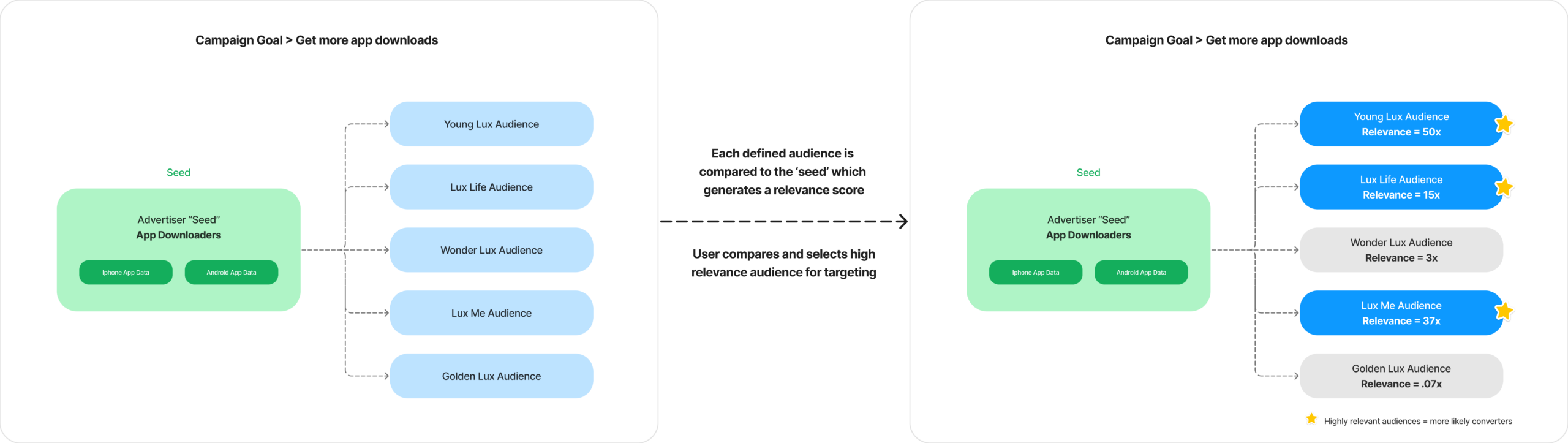
The Trade Desk helps advertisers plan and run digital campaigns across channels. Within its Kokai platform, relevance models use an advertiser’s known converters—called a Seed—to score and rank potential audiences before a campaign launches.
The challenge was not simply presenting a recommendation. Traders needed to create a reliable Seed, understand why an audience was considered relevant, and decide whether they could confidently invest campaign budget in it.
The Problem
Advertisers had hundreds of thousands of third-party audience segments to choose from, but broad labels such as “Luxury Shoppers” provided little evidence about who was actually in an audience or whether it was relevant to a particular brand.
Kokai’s relevance models could make that selection more data-driven, but they introduced a new experience challenge: its recommendations were only useful if traders could understand the underlying Seed, assess its quality, compare results, and know what action to take next.
The opportunity
We believed that connecting an advertiser’s known converters to ranked audience recommendations could shift audience selection from keyword-based discovery to evidence-based decision-making. By identifying audiences with the greatest relevance and value, Seeds could help advertisers invest their budgets more effectively and improve campaign performance.
Key Contributions
I served as the sole product designer for Advertiser Seeds, leading the experience from the original Kokai MVP through its 2026 evolution.
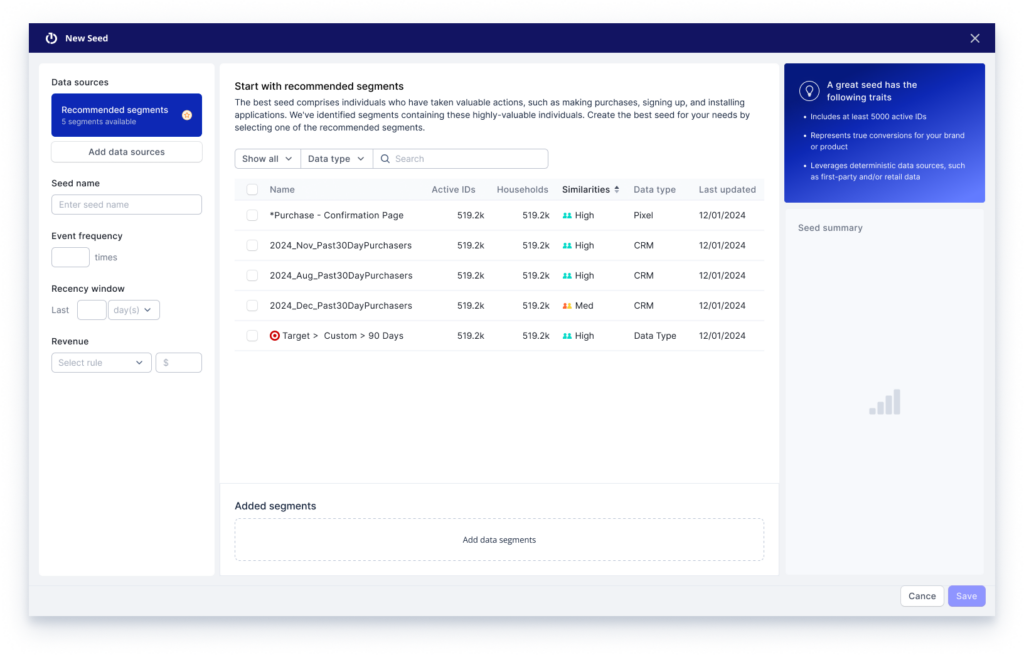
- Shaped the end-to-end experience across Seed creation, management, and activation.
- Mapped the workflow and aligned product, engineering, and data science around key touchpoints.
- Designed how traders evaluated and acted on audience recommendations.
- Conducted usability testing and refined the experience across three stages.
Design Approach
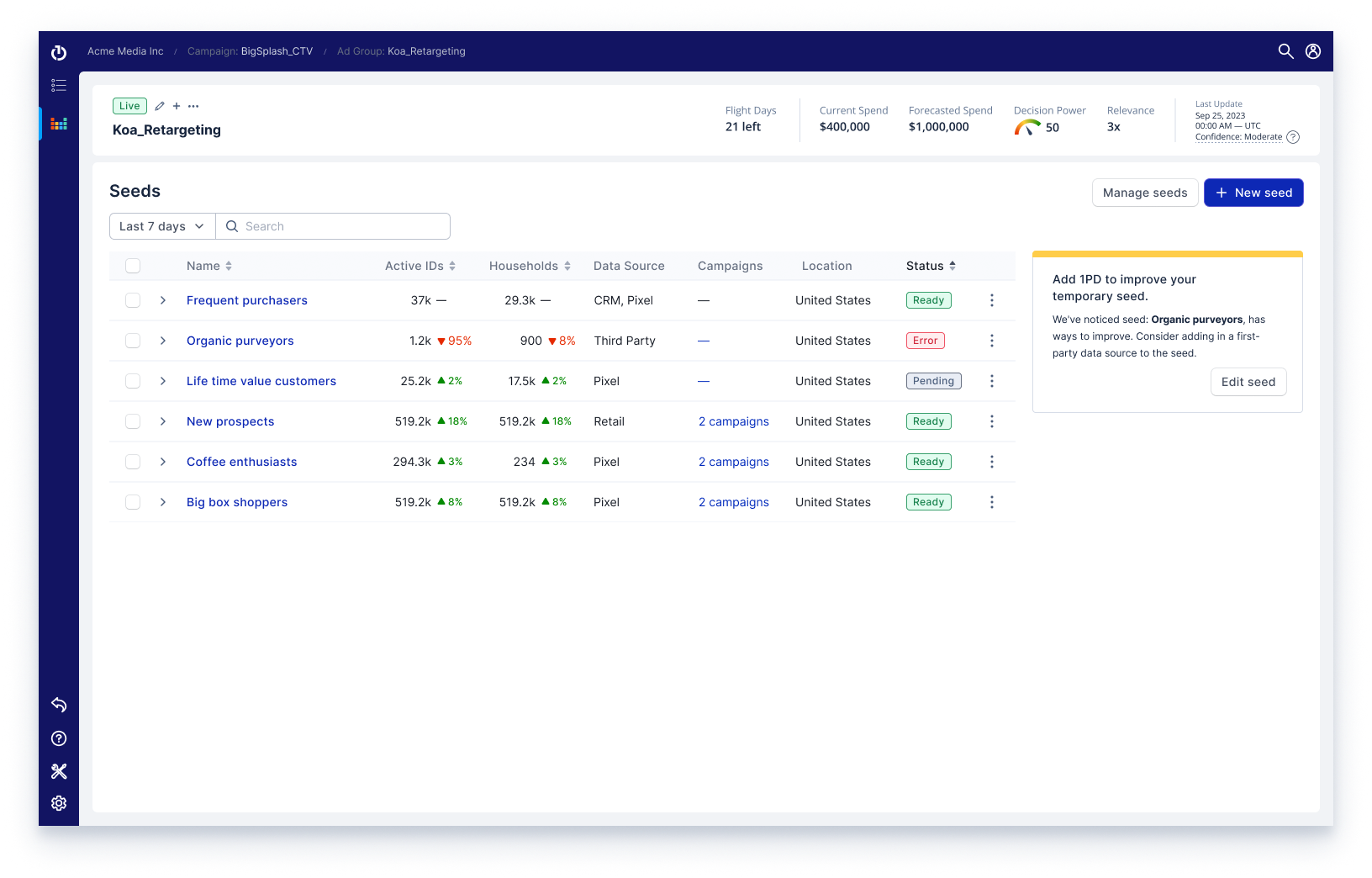
Advertiser Seeds touched multiple parts of the platform. I mapped the end-to-end experience to understand where advertisers would create, manage, evaluate, and activate Seeds—and where the experience needed to connect with existing campaign workflows.
The mapping helped the team organize the experience around three stages:
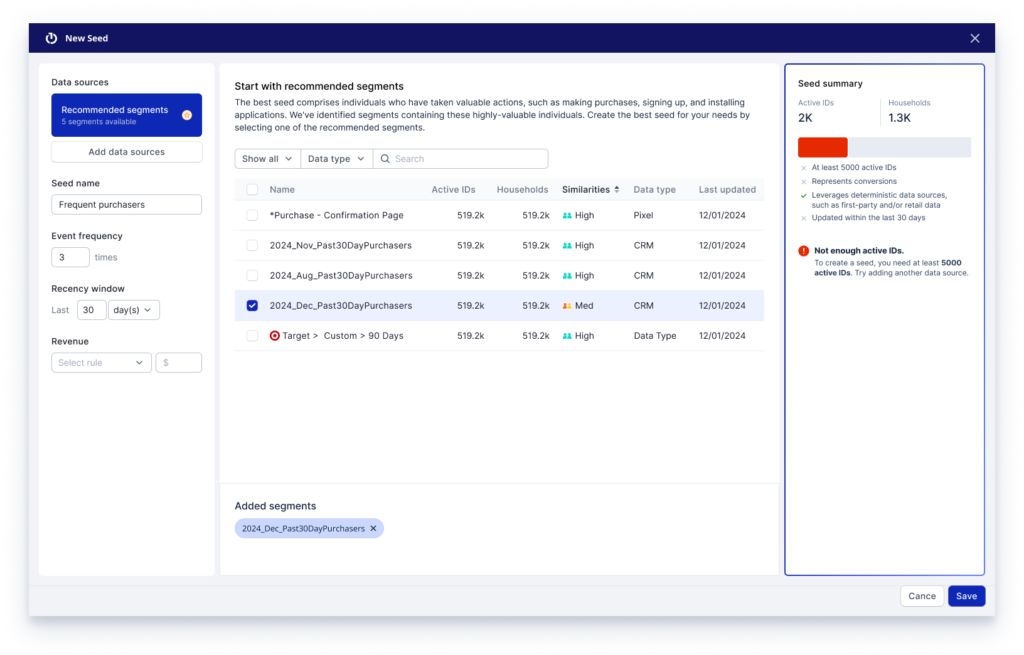
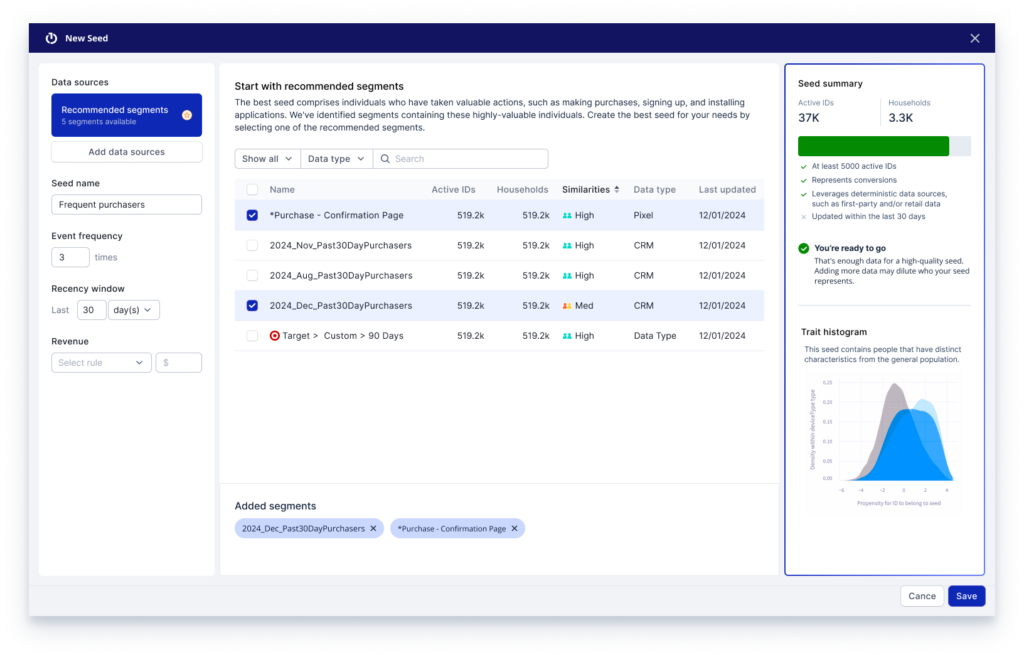
- Create: Select converter data and build a Seed.
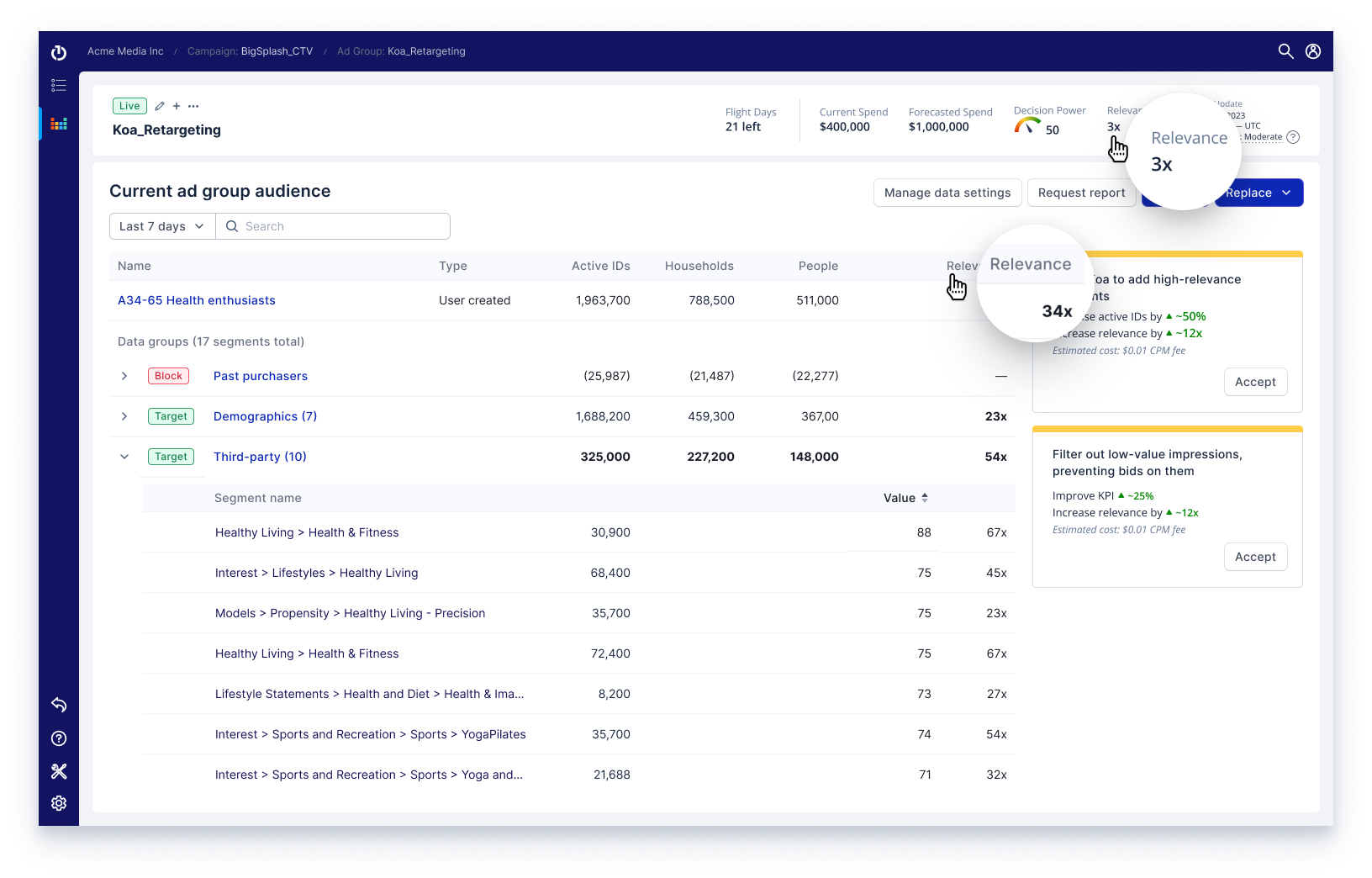
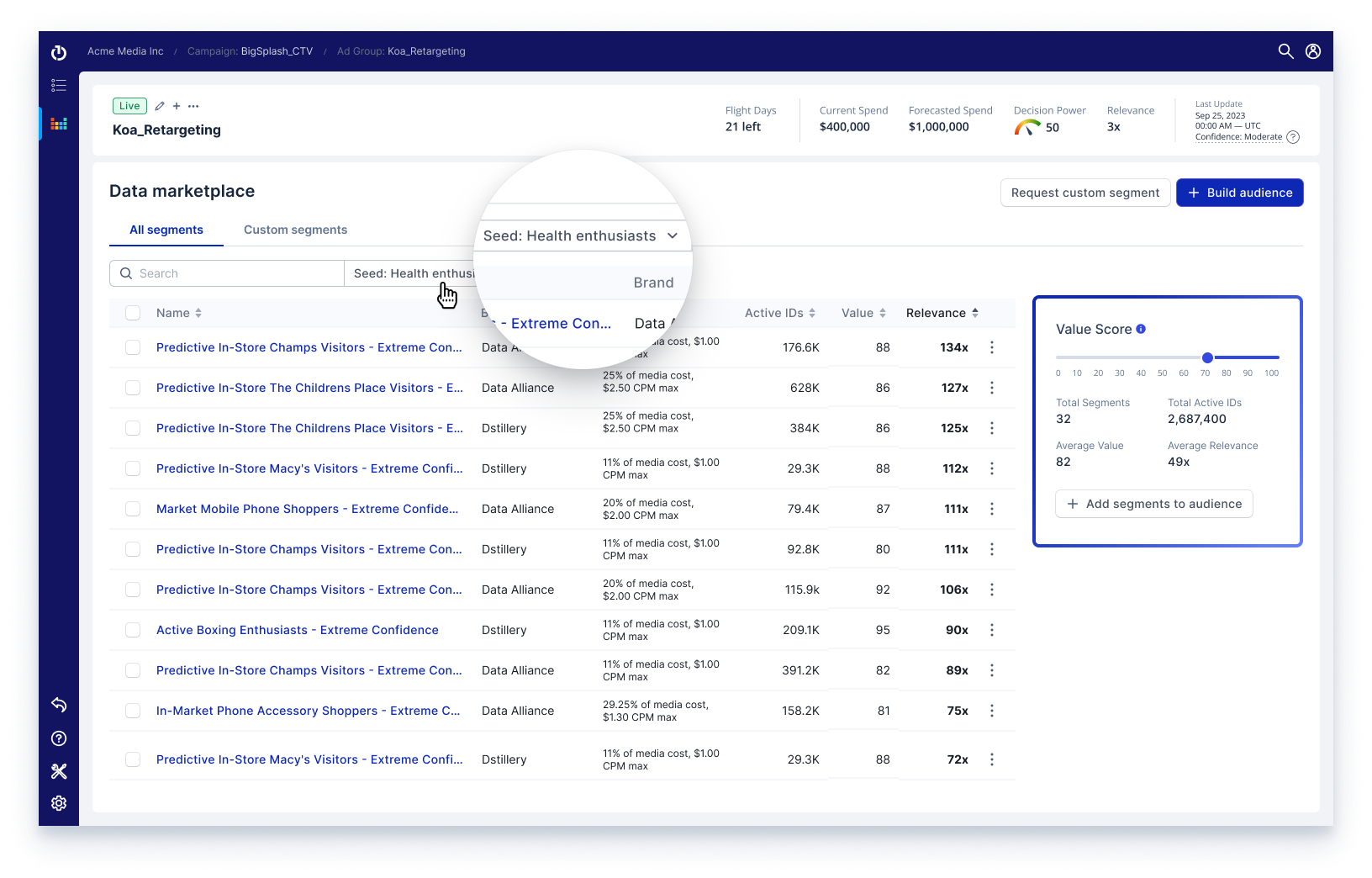
- Evaluate: Understand Seed quality and review recommended audiences.
- Activate: Select an audience and apply it to a campaign.
My goal was to make those stages feel like one clear workflow, even though they depended on multiple systems and underlying model processes.

Designing for Transparency & Trust
Traders needed enough information to trust the recommendation, but exposing every input behind the model made an already dense workflow harder to scan. I worked with data science and product to determine which signals were essential at the decision point and which could be revealed progressively.
Testing & Iteration
Usability testing revealed two recurring needs:
- More guidance when selecting the best data source for Seed creation.
- Enough supporting detail to understand recommendations without overwhelming the workflow.
These findings led me to prioritize best-fit data sources during Seed creation and reveal supporting recommendation details progressively.
The final interactions are intentionally straightforward. Much of the design work involved resolving the platform logic, dependencies, and transitions behind them so advertisers could complete the workflow without having to understand the underlying system.
Impact & Results
0.41× lower CPA
Campaign performance using
high quality seeds
15.68× higher ROAS
Campaign performance using
high quality seeds